

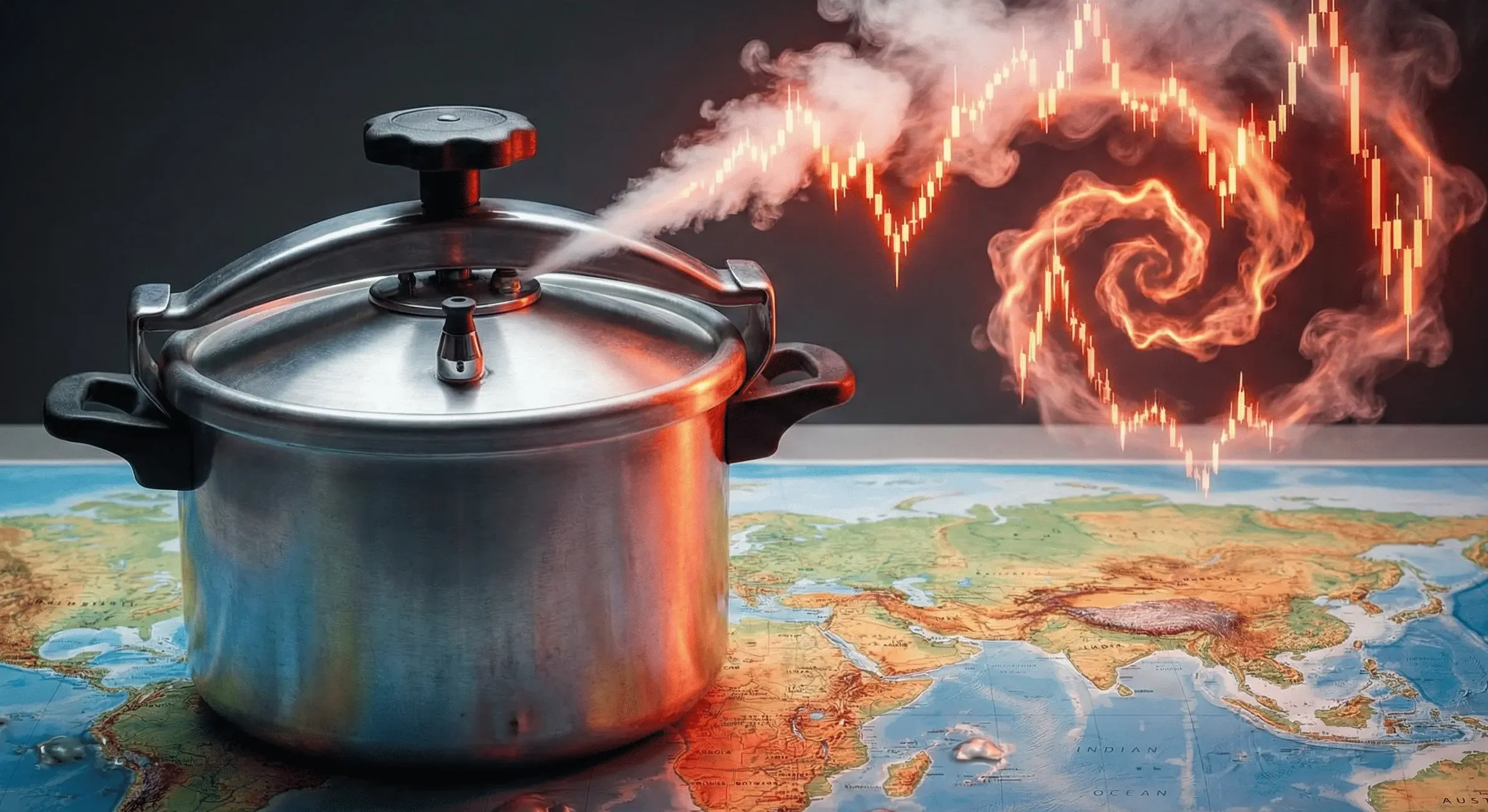
Global financial markets are entering a fragile phase as geopolitical tensions intensify, leaving investors questioning whether a volatility surge is imminent. When uncertainty rises on the global stage, stock markets often react swiftly — and sometimes sharply. Today’s environment is no different. With escalating diplomatic strains and conflict risks increasing, equities are beginning to show signs of pressure.
Stock market volatility typically reflects investor uncertainty. When geopolitical events threaten global trade routes, energy supply chains, or economic stability, markets respond with heightened fluctuations. Traders shift toward defensive positions, safe-haven assets strengthen, and major stock indices experience rapid swings. The key question now is whether current tensions could trigger a broader market correction.

Why Geopolitical Risk Impacts Stock Markets
Markets thrive on stability and predictability. Corporate earnings forecasts, interest rate expectations, and economic growth projections depend heavily on stable global conditions. When geopolitical tensions rise — especially involving major global powers or critical trade regions — uncertainty clouds these projections.
For example, threats to key shipping lanes or energy corridors can disrupt oil supply chains, pushing inflation concerns higher. Rising energy prices often translate into increased production costs for companies, which can compress profit margins. As a result, investors reassess stock valuations, leading to selling pressure.
Additionally, global tensions can prompt a “risk-off” sentiment. In risk-off environments, investors move capital away from equities and into traditionally safer assets such as gold, government bonds, or defensive sectors like utilities and healthcare. This shift can weigh heavily on growth stocks and cyclical industries.
Also read-Why Gold ETF Inflows Just a 6 Months High Is Important
Major Indices Showing Sensitivity
Leading benchmarks such as the S&P 500, Dow Jones Industrial Average, and Nasdaq Composite often reflect geopolitical stress quickly. Technology and consumer discretionary sectors, which rely on global supply chains and strong consumer confidence, tend to be particularly sensitive.
When tensions escalate, intraday market swings typically increase. Investors may witness sharp rallies followed by equally sudden pullbacks. This pattern signals elevated volatility and uncertainty rather than sustained directional momentum.
Historically, geopolitical shocks have caused short-term market turbulence but not always long-term damage. However, prolonged conflicts or disruptions to global trade can create more persistent economic consequences, affecting corporate earnings and growth forecasts.
The Role of Central Banks
Central banks play a crucial role during periods of heightened volatility. The Federal Reserve, for instance, closely monitors financial stability risks. If market stress intensifies, policymakers may adjust interest rate guidance or liquidity measures to stabilize investor confidence.
However, central banks face a delicate balancing act. If inflation remains elevated, policymakers may hesitate to introduce aggressive stimulus measures, even if markets weaken. This tension between inflation control and financial stability adds another layer of uncertainty for investors.
Sector Winners and Losers
While broad market indices may come under pressure, not all sectors respond the same way. Defense companies often benefit from increased government spending during periods of geopolitical strain. Energy stocks may rise if oil prices climb due to supply concerns. Conversely, airlines, tourism, and high-growth technology stocks often struggle amid uncertainty.
Investors seeking to navigate volatility may rotate toward dividend-paying stocks or sectors considered resilient during economic stress. Portfolio diversification becomes increasingly important when market swings intensify.
Is a Market Correction Coming?
A volatility surge does not automatically mean a stock market crash. Corrections — typically defined as a 10% decline from recent highs — are a normal part of market cycles. What matters most is whether rising tensions lead to structural economic disruption or remain contained diplomatically.
Markets tend to price in worst-case scenarios quickly. If tensions ease or negotiations progress, equities can rebound just as rapidly. This is why volatility often spikes during headlines but subsides once clarity emerges.
Investors should avoid emotional decision-making during turbulent periods. Panic selling during short-term volatility can lock in losses unnecessarily. Instead, long-term investors may view pullbacks as opportunities to accumulate quality stocks at more attractive valuations.

Strategic Approach for Investors
During uncertain times, investors may consider:
- Reviewing portfolio diversification
- Reducing overexposure to highly speculative assets
- Monitoring inflation and interest rate trends
- Keeping a portion of capital in defensive sectors
- Staying informed but avoiding reactionary trades
Risk management becomes essential. Position sizing, stop-loss strategies, and asset allocation reviews can help mitigate downside risk while maintaining upside potential.
Final Thoughts
Volatility may indeed be on the horizon as rising tensions place stocks under pressure. While geopolitical uncertainty can shake markets in the short term, history shows that resilient economies and corporate fundamentals often prevail over time.
The coming weeks will likely test investor patience and discipline. Whether this period marks a temporary spike in volatility or the beginning of a broader correction will depend largely on how global tensions evolve.
For now, caution — not panic — appears to be the most rational response.